
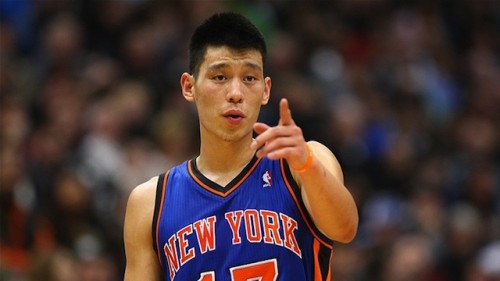
Poynter hits all the right notes in covering the ESPN Jeremy Lin headline controversy

Written by Matt Yoder on .

jeremylin2

AA has routinely taken the ESPN Ombudsman to task for their lack of impactful writing and coverage of ESPN in the last year.  The Poynter Institute has often fallen short in meaningful information and criticism for readers, fans, and observers of ESPN ever since their tenure as ombudsman began.  At times, the Poynter staff might as well have been ESPN PR crafting pieces that defended the network without offering any real and relevant questions or criticism.  However, Jason Fry's effort in tackling one of ESPN's biggest controversies in the last year hit all the right notes.  

Poynter was swift in their reaction piece to the infamous statements about Jeremy Lin that led to one editor being fired and one ESPNEWS anchor being suspended for 30 days.  Fry's column also answered the question that ESPN declined to address initially - why was there not checks and balances in place to protect editor Anthony Federico from having a possibly offensive headline from being published at 2:30 AM.  Here's the story from Poynter on how the headline was published without a safety net in place...

Anthony Mormile, vice president for mobile content at ESPN, said the Bristol-based editorial team for the mobile sites consists of eight people who usually work two per shift. After 2 a.m., one editor is often catching up on the “back end,” updating content for sports that aren’t in season and taking care of other editorial loose ends. The other editor is generally handling the “front end” of the site, loading up “experience carousels” with headlines, summaries and links to articles. (Because cellphones offer less screen real estate than desktop computers, the mobile editors often write different headlines.)

Mormile said that, on Saturday night, the front-end editor -- 28-year-old Anthony Federico, who had six years of experience on the mobile team -- liked Begley’s column and decided to spotlight it for the mobile site, sensing that the conversation had shifted from the Knicks’ loss to potential holes in Lin’s game.

On the Web side, (ESPN SR VP Rob) King said, lead content packages and headlines go through a copy desk before they’re pushed live, and a copy editor is always there when a home page editor is working. But the mobile team doesn’t have “that level of oversight … you had one person making a move that a lot of people could see.”

Mormile says the mobile editors generally double-check each other’s work, providing at least an informal safety net. But the other editor on Federico’s shift was busy supporting ESPN’s Bracket Bound app, which is getting a lot of usage in the run-up to March Madness. Federico pushed the headline out himself -- and, when Mormile was alerted a little after 3 a.m., Twitter “was blowing up with people putting up screen shots and condemnations.”

Federico offered another lengthy apology on his Twitter page Wednesday.  As more information becomes available, it truly does seem like he was a victim of a horrible series of events and not trying to be clever and offensive.  One of the questions I originally had was how the mobile headline could be published without anyone seeing it and noticing the potential firestorm with that phrase before going live.  Given ESPN is the worldwide leader in sports, it is very surprising that one solitary person would have the sole ability to produce anything in the online/mobile world on their own.  Rob King tells Poynter later in the article that Bristol is addressing a streamlining of their web and mobile units to provide a more consistent editorial system that would help to prevent this kind of episode from happening again.  With a small city of employees, it's hard to believe that wasn't in place already.

As to the seemingly harsh punishments, Fry also revealed that ESPN had addressed the racial sensitivity of Jeremy Lin's story and the surrounding media coverage in a high level meeting not previously reported:

One potential factor in the severity of the punishments: Earlier in the week, racial sensitivity regarding the Lin storyline was a topic in the company’s monthly editorial board meeting, and ESPN issued a memo to all its content groups urging staffers to be cognizant of how Lin was discussed -- a directive that was revisited in a Friday staff meeting.

Given this information, it is more understandable as to why ESPN handed down the firm discipline they did in these cases.  Just a week earlier, Jason Whitlock had angered millions with his insensitive garbage, so everyone at ESPN had to know to be incredibly careful with anything that even remotely touched Linsanity.  

Even with that information though, Fry is critical of ESPN for the 30 day suspension of Max Bretos as being too stiff given his remark could not have the same filter as the mobile headline:

The 30-day suspension of Bretos -- who has been with ESPN for two years -- strikes us as too harsh, though. Looking at the clip of Bretos’ comments, we see no sign he was trying to be snarky or clever, and an on-air reporter must think, listen and talk in real time, with no chance to review his or her words. Flubs and slips of the tongue are a hazard of the trade, and an unfortunate choice of words at the wrong time can be devastating. Reconsidering Bretos’ sentence would neither undermine ESPN's speedy and forthright response to these incidents nor damage its efforts to make sure such a thing doesn’t happen again.

That's quite true, but in this case ESPN needed to act quickly and decisively with both Federico and Bretos.  Had ESPN done nothing to Bretos after firing Federico, you can be sure there would have been a much larger outcry.  Again, it's more of an unfortunate circumstance than anything and Bretos should be able to fully recover after his time on the sidelines.  

From top to bottom, this is the kind of article we've been hoping for from the Poynter Institute all along.  There was fresh reporting, criticism when warranted, and more transparency and information for readers and fans of ESPN.  In this instance, Poynter had to address how the mobile headline was published and what steps ESPN is going to take to ensure it doesn't happen again.  Jason Fry's piece accomplished that and more.  Let's hope it's a turning point for the ESPN Ombudsman.

[follow]

5 comments
morganwick
morganwick

It's not just politics and egos. Some things are institutions and traditions, like Chris Berman on the NFL Draft. I bet most of the people still watching ESPN actually like him and may even be watching solely for him. Familiar faces are a big factor in sports television.


It's worth noting that the very top announcers are either relatively young or actually considered good, at least on play-by-play (Tim McCarver isn't so lucky, but who does Fox have to replace him with?). Joe Buck was shockingly young for a lead announcer when he became the face of Fox Sports. Granted nepotism had something to do with it, but that doesn't quite explain why he didn't leapfrog Dick Stockton or Kenny Albert when Summerall retired, or why he was picked ahead of Thom Brennaman when Fox got the baseball contract. Jim Nantz is relatively young for a lead announcer, yet he became the face of CBS when Dick Enberg was still around. By the time Keith Jackson retired he was working Pac-10 games almost exclusively, plus the Rose Bowl. ESPN could have chosen one of a gazillion announcers to helm MNF, including Sunday Night incumbent Mike Patrick, but instead they went with Mike Tirico, who might be one of the youngest TV announcers in the entire NFL. And no one is calling for Tom Hammond to replace Al Michaels as the voice of Sunday Night Football (in fact NBC may have no choice but to bump Bob Costas to the booth when Michaels retires at the moment, and they may be screwed if Costas retires too), nor is anyone calling for Marv Albert's head.


Besides, a lead announcer needs a certain quality that very few have, and one that maybe resides entirely with the voice. That may be the biggest reason I so often break with AA in piling on to a lot of announcers. The gravelly voice of a Scully, Enberg, or Musberger (and to some extent a Michaels, Buck, or Jackson) gives them an authoritativeness Americans can trust; it's why Chris Berman had such a long career (including still doing the draft - who else at ESPN has that same aura? Certainly not Trey Wingo) and could have become a play-by-play institution if he didn't spend so much time cultivating his clown character (and even then he could have become Gus Johnson before there was Gus Johnson). Bob Costas also projects a certain aura as an announcer (though even then he seems to be more in his element in the studio than the booth). Nantz has some of that aura, though maybe not an ideal amount. Gus Johnson doesn't have it at all; the qualities that make him so beloved by the blogosphere realistically make him more of a sideshow than a legit #1 guy. Even as great as Sean McDonough or Dan Shulman may be, I'd have trouble seeing them as the face of a broadcast network, especially McDonough who comes across as a bit of a nerd who's kind of happy to be there (there's a reason he often forms a three-man booth with Jay Bilas and Bill Raftery for his biggest college basketball assignments). Shulman is growing on me, though; it helps that he kind of sounds like Buck if you squint.


I don't think Gus Johnson has been quite as buried as a lot of people believe. Don't judge based on the first season when Fox was just starting its college football division and its contracts hadn't kicked in yet. Fox will call more games on the broadcast network next year, and higher-profile ones. I think Fox sees him as their equivalent to Verne Lundquist. You never see Lundquist call NFL games, yet he's arguably CBS' #2 most visible announcer. The only thing keeping Gus from that level is Fox's lack of non-football contracts (and what non-football contracts they do have, like NASCAR and UFC, tending to use specialized teams), though his absence from baseball is somewhat perplexing. (I once read that he apparently underwhelmed as Strikeforce announcer, which is why Jon freaking Anik is calling fights on FX instead of him. Now there's someone without the aura to be a top announcer.)


By the way, I watched NFL Network's coverage this April, but it was because the NFL Network actually covered the later rounds in years past, not because I preferred Rich Eisen to Boomer, Mike Mayock to Mel Kiper, Michael Lombardi and Jason La Canfora to Chris Mortensen and Adam Schefter, or Mooch to This Guy. I might switch back to ESPN next year, though, because even though they spend large amounts of time ignoring the actual draft they're supposedly covering in favor of talking about the first round over and over, at least last I checked they did actually get around to the picks they were talking over. I can probably count the number of seventh round picks NFLN actually talked about on one hand. What the hell is the point of covering the later rounds if you're just going to ignore them and rehash the first round over and over until Mr. Irrelevant shows up? (Sorry, pet peeve. At least both networks cover the second round fairly competently and completely these days, something ESPN was hit-or-miss on before they shortened the rounds, NFLN joined the fray, and it became three days.)

axhfan
axhfan

For major events I think the networks should have little to no loyalty when it comes to producing a quality product. But on the other hand you can't treat PBP like it's seperate from any other workforce. If I'm at McDonalds, doing an good (maybe not great) job, I would be pissed off if I got fired. In fact, it would be illegal if they simply said "we have an applicant that will do better". So some sense of loyalty I understand. But for national events like the US Open and the Final Four? You need your A-team.

ukraine is weak
ukraine is weak

he's unbearable!  What in the world are they thinking? I've been at social events at my in-laws that were more less painful than hearing Berman butcher the US Open

soul food
soul food

While I don't agree with all of your examples, Berman clearly drags down the US Open and the draft. Keith Jackson is certainly a legend but after 2000, he just didn't have his A game anymore. Two very memorable BCS Championships (OSU vs Miami... Texas vs. USC) were given 2 lackluster performances by Jackson which is a shame.  


By the same token, media companies are to blame for empowering these guys with perks, contracts, pampering, and promises. 

LordCalvert
LordCalvert

I think one of the questions that should be asked here and is not is, "How *do* you nurture and develop broadcasting talent?" Being a good play-by-play man takes a great deal of experience, training and natural talent and they're not necessarily interchangeable from sport to sport. Some people can do it, Pete Weber is brilliant for both hockey and baseball but not everyone can switch sports like that. In my own city (Buffalo), we've had several broadcasting legends: Van Miller (Bills), Ted Darling and Rick Jeanneret (Sabres). All Hall of Fame broadcasters and all more than deservedly so. Miller left the Bills when it became obvious that his skills deteriorated to the point that he was no longer capable and John Murphy became and exceptionally credible replacement. Darling left when the ravages of Pick's Disease destroyed his keen mind. Jeanneret just signed a multi-year contract to keep broadcasting for the Sabres. The Sabres problem in that regard is not that RJ is simply so well loved by the fanbase (he is) but that there simply isn't a decent replacement waiting in the wings. They tried several and none have been really suitable, including Kevin Sylvester who was just released from the broadcast team to do a radio show. We didn't get the combination of luck and diligence that the Washington Capitals got when they nurtured the superlative John Walton. There is NO ONE behind Jeanneret who is even remotely close to his level of skill. I shudder over what might happen in Los Angeles when Vin Scully retires because there is still no one better at calling a ballgame than he is, despite his age. Sometimes these legends stay so long because the people to replace them AREN'T there. So, how is finding this talent and developing it done? Should there be a system? Is doing it in the minors the way (as Walton did) or is learning from a master in the bigs the way (as Jeanneret did)? I don't know that answer but I think it is long past time that we start finding out. 

You Might Like...

Top Stories