
A story we've closely followed over the last year and a half has been what's happened to journalism at ESPN. As one of the biggest, most valuable media companies in the entire world, ESPN can be all things to all people. They air the games, report about the games, debate the games, and all on global platforms of TV, radio, and the internet.
Sports fans have to feel they can trust ESPN because ESPN is sports. The national sports discussion is ESPN and what ESPN's talking about dictates and reflects what sports fans are talking about on Twitter, around water coolers, and everywhere in between.
But in the last year and a half, that trust factor has eroded for fans who follow the sports world and the world that covers sports closely. Several things happened this week to bring this to the forefront. Monday, the scrutiny facing ESPN's journalistic practices reached new heights as Poynter filed their last column as ESPN ombudsman and John Koblin filed a great piece on ESPN selling their soul to Tim Tebow at Deadspin. Monday night, Rick Reilly was sheepishly caught begging for attribution in having Ben Roethlisberger's injury news first on Twitter. Then on Wednesday, Fox's Jay Glazer became the latest reporter to publicly call out ESPN for stealing one of his reports without attribution. The combination of those two pieces (that are well worth your time to read in full), Reilly's actions, and Glazer's frustration bring to light an issue that has haunted ESPN in the last year and a half.
ESPN is losing our trust.
Not for all viewers and readers certainly, not even the majority, or probably even close to it. For most ESPN watchers, the network's journalistic practices are less than an afterthought to the latest game, debate, or evening SportsCenter. But enough engaged sports fans who follow ESPN almost as closely as they do the sports themselves are beginning to lose faith in the self-proclaimed worldwide leader. The explosion of blogs and Twitter has meant there are more engaged fans than ever before who pursue information beyond the Bristol city limits and don't have to take ESPN at their first word. With more information available to fans, we're much more likely to know now whether or not we're getting a square deal from ESPN.
The questions surrounding ESPN's journalistic practices first became a serious topic when Bruce Feldman was suspended in July 2011. At the time, I called it ESPN's journalistic Waterloo. Sure, we had The Decision and Bonds on Bonds before that, but Feldman's suspension was the watershed moment in questions towards ESPN's integrity. Since that episode, the tidal wave of skepticism towards ESPN has increased tenfold. When ESPN chose to stick with Craig James – a backslapping, underhanded analyst with delusional Senatorial aspirations over Bruce Feldman – a journalist with a sterling reputation and support from colleagues and rival competitors, the company set its course for the future. The fact that ESPN college football reporter Joe Schad was taking notes directly from Craig James and his hired PR firm was a sure sign honest journalism was nowhere to be found.
Since the Feldman debacle, we've seen numerous stories shedding light on everything from ESPN's questionable use of sources to them pulling the strings on conference realignment to birthday parties for Tim Tebow. A selection…
October 2011 – Boston College AD Gene DeFilippo lets it slip that ESPN "told us what to do" regarding the ACC and conference realignment. DeFilippo then had to embarrassingly correct himself when ESPN publicly disputed his quote.
November 2011 – E-mails released from Texas A&M AD Bill Byrne show the university in a panic over ESPN's relationship with Texas and the Longhorn Network. Byrne notes ESPN "threatened" Texas Tech with putting one of their games on LHN.
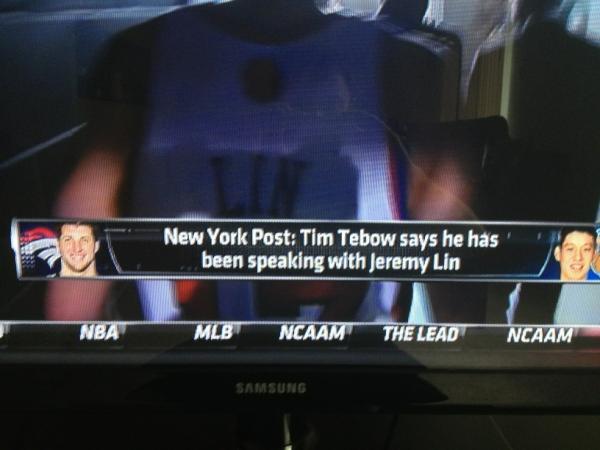
November 2011 – #WhenSkipMeetsTebow
December 2011 – One of many ESPN sourcing controversies in the past year.
May 2012 – Sarah Phillips.
July 2012 – Arsenal's Lukas Podolski claims ESPN Soccernet published a fabricated interview with him. Nobody knows what if any action ESPN took regarding the claims except for pulling the article.
July 2012 – Chris Broussard's sources report information known by everyone else in the world.
August 2012 – Saints GM Mickey Loomis is cleared in a wiretapping probe, bringing ESPN's report on the matter under serious doubt. Questions emerge about ESPN's John Barr staying in New Orleans until he could find something negative to report on the franchise.

August 2012 – JetsCenter takes over ESPN for almost 3 weeks. And, I went on a bit of a Twitter rant when watching ESPN's Tim Tebow birthday extravaganza.
October 2012 – David Stern and the NBA reportedly blocks ESPN's hiring of Stan Van Gundy, ESPN denies the NBA's role.
November 2011 – November 2012 – ESPN reports sexual abuse allegations against Syracuse basketball assistant Bernie Fine after largely missing out on the Jerry Sandusky case. After a year long investigation, FIne faces no charges. ESPN's Mark Schwarz is questioned for connecting accusers with one another and ESPN is questioned for aggressively over-pursuing this story in the wake of being slow to react to the Penn State scandal.
November 2012 – Jay Glazer becomes the latest to accuse ESPN of stealing his scoop and changing his name to "Source."
And again, that's just a selection since last July of the troubles and criticisms facing ESPN's journalistic integrity. Deadspin highlighted even more cases like the Lynn Hoppes fiasco. The problem isn't that these incidents occur. At a place as large as ESPN, they are bound to happen occasionally. The problem is the apparent lack of action taken regarding ESPN's direction and the fact they keep occurring more and more frequently.
As ESPN ombudsman, we had hopes the Poynter Institute would hold ESPN's journalistic practices accountable in the public eye. While Poynter had a few hits, it was clear from the beginning they were going to serve ESPN internally more than serving viewers externally. For that reason, Poynter's tenure was largely a disappointment. They never delivered on a promised Craig James column and never answered to some of the more consistent concerns voiced regarding ESPN. Instead, there were columns about standardized policies, ad-approvals, how to use Twitter, and interviewing practices. The columns that did hit on relevant topics, like this one on Chris Broussard's sources or Bob Knight were scarce. Poynter's final column yesterday did hit on the big picture, though. Because of ESPN's sheer power and reach, they demand a high level of scrutiny…
"ESPN’s critics seize on every mistake, which can make the company’s editors, producers and PR folks defensive at times. That’s understandable; it’s not easy waking up each morning knowing you’re a big target.
But to put it simply … tough. ESPN’s sheer size and power demand such scrutiny. Media analyst SNL Kagan estimates ESPN will make $8.2 billion in revenue this year. It controls the rights to a huge range of live sports, using that content as fuel for its sports-information engine. ESPN’s fulfillment of its ambitions in recent years has been nothing sort of breathtaking. It understands the primacy of live sports rights in broadcasting today, has the financial muscle, in theory, to buy whatever rights it sees as necessary and has the ambition to think on an amazing scale.
As a result, ESPN has come very close to being synonymous with sports in the United States, with its business deals reshaping the very landscape of college sports conferences, to name just one high-profile example of its power and influence.
This places considerable strain on its journalists. ESPN draws lines between its news division and its business and production arms, and we never heard of an executive storming across that line and telling ESPN journalists what to do or what not to do. At its best, ESPN’s reporting is thorough and uncompromising about matters of great concern to its business partners: Take its recent series on football concussions, or the throw-the-script-away “SportsCenter” that followed the debacle of an NFL replacement ref’s blown call that cost Green Bay a victory in Seattle. Both storylines served fans and undermined the business interests of the NFL.
But although ESPN has sought to separate its divisions and so preserve its journalists’ integrity, there is a massive and inherent conflict of interest here, so the arrangement demands constant monitoring. ESPN is so big that it occupies a position in sports not unlike that of Microsoft in the ecosystem for computer hardware and software in the late 1990s, or Apple’s place at the intersection of hardware, apps and downloads today."
That conflict of interest was illuminated in John Koblin's stellar piece chronicling how the network hitched its wagon to Tim Tebow. The most stunning aspect of the story was SportsCenter competing directly with First Take and shifting to more Tebow coverage because of First Take's ratings success eating into SportsCenter's ratings. The result? Skip Bayless and First Take's decision to go All Tebow All The Time forced SportsCenter's hand and the agenda of the entire network. Here's the money quote from Koblin:
"And what dawned on a segment of the newsroom was something that would've seemed absurd even five years ago: Skip Bayless and Stephen A. Smith were indirectly setting the editorial agenda for the biggest platform in the sports world. As our source put it to me, First Take's ratings surge late last year "completely changed" the look of ESPN."
Doesn't that part in bold startle you? Because Tebow equaled ratings for First Take, SportsCenter had to go Tebow. Other studio shows had to go Tebow. Radio had to go Tebow. Online had to go Tebow. The entire ESPN Universe had to revolve around Tim Tebow. Now, even ESPN college basketball broadcasters are openly making light of their own network's obsession with the man as the universe begins to cave in on itself.
ESPN expects us as viewers to compartmentalize the ESPN empire. To some extent, that's possible. I've heard from scores of people on Twitter in the last year who used to watch ESPN 24/7 and now only watch the games because they got tired of everything else. It's true that ESPN is not a monolith and there are a ton of things ESPN still does very well. But isn't ESPN concerned that people are actively turning away from their news and analysis? Isn't ESPN concerned with the fans that are losing faith in their network operation?
These journalistic questions affect the ESPN brand as a whole because they are systemic. Sure, they may not affect your viewing of 30 for 30 or game coverage. But, when you see "Source" on a screen, can you really trust that ESPN – from the corporate suits to production staffs – is being honest with you? When you see someone get credit for breaking a story on Twitter, can you really trust that they had it first? Can you really trust what you see and hear on SportsCenter is ESPN's honest attempt at journalism, or are they just reading Jay Glazer or Jon Heyman's Twitter timeline and passing it off as their own?
When you see the latest Tim Tebow debate, you should know by now that it's not news, it's just lowly ambulance chasing for ratings from the most robust sports company in the world. Is that serving viewers first? Is that the breathtaking fulfillment of ESPN's highest ambitions Poynter speaks of?
Maybe we're to blame. Maybe if we watched more Outside the Lines than First Take, maybe if we supported the more ambitious pieces at Grantland or from ESPN The Magazine, maybe if Bob Ley had more Twitter followers than Skip Bayless and Stephen A. Smith, maybe if we actually turned the channel when ESPN did talk Tebow, things would be different.
But ESPN is ultimately responsible for setting their own course. ESPN has made the decision to chase ratings instead of real stories. ESPN has made the decision to ignore the cries from competitors that they are stealing scoops and continue with the same old practices because they're big enough to get away with it. Just take a moment and imagine CNN stealing stories from ABC and CBS and Fox News. It would be the journalistic scandal of the century. And yet, these same questions are levied now almost weekly at ESPN, a company worth $40 billion dollars, with no repercussions whatsoever. ESPN feels they can credit Fox Sports in an online article for first breaking a story and then remove it altogether like nothing ever happened. Isn't there something wrong with that picture?
ESPN has made their bed with TebowMania and Linsanity and "embrace debate" and shady sources. Now they have to lie in it. If those extra ratings are worth losing trust from more engaged, committed sports fan and pushing respected entities to the margins, so be it. If Skip Bayless is going to be the one to lead the Bristol brigade like he's General Custer with a bunch of anonymous sources backing him, so be it. It's the choice ESPN has made.
Why do we care so much about ESPN's journalism? Because almost everything you know and hear about sports is filtered through ESPN. If ESPN says hockey "doesn't transfer to a national discussion" then it doesn't. ESPN is that powerful and any powerful entity needs to be held accountable. Because we shouldn't have to live in a world where the default reaction to an ESPN report is that it's actually somebody else's work. For all those reasons, the microscope needs to stay fixed on ESPN's journalistic practices. Permanently.


Comments are closed.